
Appliance Leak Water Damage
Appliance leak water damage restoration addresses flooding from failed washing machines, dishwashers, water heaters, refrigerators, and other household appliances through rapid water extraction, material removal, structural drying, and reconstruction of affected areas.
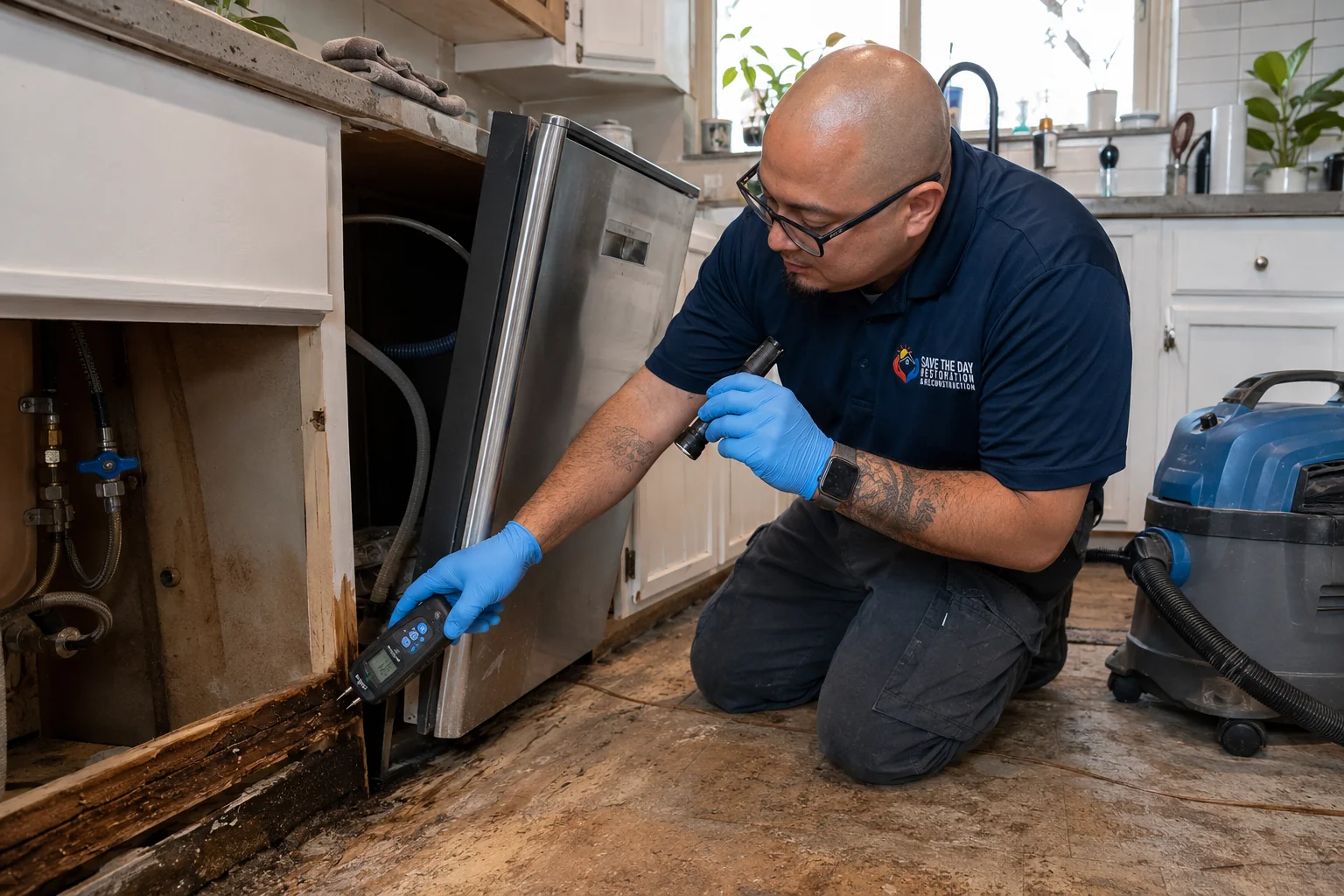
Appliance Leak Water Damage Restoration in Los Angeles & Orange County
Quick Answer: Appliance leaks are the #1 cause of residential water damage insurance claims in the United States. Washing machines, water heaters, dishwashers, refrigerators, and ice makers can release 50-500+ gallons before the leak is discovered—flooding floors, saturating walls, and damaging ceilings below. Appliance leak restoration includes emergency water extraction, removal of saturated materials, structural drying with commercial equipment, mold prevention, and complete reconstruction. Most appliance leaks are covered by homeowner’s insurance as sudden, accidental events. Save The Day Restoration provides 24/7 appliance leak emergency response throughout LA and Orange County. Call (562) 246-9908.
Why Are Appliance Leaks So Damaging?
Appliance leaks combine two factors that make them exceptionally destructive: high water volume and delayed discovery. A washing machine supply hose failure can release 500+ gallons per hour at full municipal pressure. A water heater tank failure dumps 40-80 gallons instantly, then continues flowing from the supply line. A dishwasher leak beneath cabinetry can run undetected for weeks, silently destroying subfloor and adjacent materials.
The delay factor is critical. Many appliance leaks occur while homeowners are asleep, at work, or on vacation. A washing machine hose that bursts at 9 AM on a Tuesday while both homeowners are at work continues flooding the laundry room, kitchen, hallway, and adjacent rooms for 8-10 hours before anyone arrives home. At 500 gallons per hour, that’s 4,000-5,000 gallons—enough to flood an entire floor of a home.
Second-floor appliance leaks are particularly devastating. Water from an upstairs washing machine or water heater travels through the floor system, flooding the ceiling below, running down walls, and damaging two floors simultaneously. The ceiling below an appliance leak often collapses from the weight of absorbed water, creating additional debris damage to the room below.
Which Appliances Cause the Most Water Damage?
Washing Machines
Washing machines are the single largest source of appliance water damage claims. The primary failure point is the rubber supply hoses connecting the machine to hot and cold water valves. Standard rubber hoses deteriorate over 3-5 years, developing cracks and weak spots that eventually burst under constant water pressure. Because supply valves are typically left on 24/7, a hose failure releases water at full municipal pressure (40-80 PSI) continuously until discovered and shut off. Braided stainless steel hoses are significantly more durable and are the single most cost-effective prevention measure for any homeowner.
Water Heaters
Tank-style water heaters have a finite lifespan of 8-12 years. As the tank ages, internal corrosion (accelerated by mineral deposits and sediment) weakens the tank wall until it fails. Tank failures release 40-80 gallons immediately, followed by continuous flow from the cold water supply line. Water heaters located in garages cause less structural damage; those in closets, utility rooms, or on upper floors cause extensive damage to surrounding areas. Slow leaks from corroded fittings, failed T&P valves, and deteriorating connections can run undetected for weeks.
Dishwashers
Dishwasher leaks are insidious because they occur beneath and behind cabinetry where they’re invisible. Common failure points include the door gasket (allowing water to seep beneath the unit during cycles), supply line connections, drain hose failures, and float switch malfunctions that allow overfilling. Because the water pools beneath cabinets and behind the dishwasher, damage often progresses for weeks before discoloration, odor, or flooring damage becomes visible. By then, subfloor, cabinetry, and adjacent wall materials may be extensively damaged with active mold growth.
Refrigerators with Ice Makers/Water Dispensers
The small-diameter water supply line running to refrigerator ice makers and water dispensers is a frequent leak source. These quarter-inch lines—often plastic or thin copper—are easily kinked during installation, damaged when the refrigerator is pushed back against the wall, or corrode at compression fittings over time. Leaks are typically slow but persistent, damaging the floor beneath and behind the refrigerator over weeks or months before detection.
HVAC Condensate and Drain Pans
Air conditioning systems produce significant condensate—particularly during Southern California’s humid summer months. Clogged condensate drain lines, cracked drain pans, and overflow events release water into attics, utility closets, or ceiling cavities. HVAC-related leaks are covered separately on our HVAC Leak Water Damage page.
What Should You Do When You Discover an Appliance Leak?
Shut off the water supply to the appliance immediately. Every appliance has dedicated shutoff valves: washing machines have hot and cold valves behind the unit, water heaters have a cold water inlet valve on top, dishwashers have a valve under the kitchen sink, and refrigerator ice makers have a valve behind the unit or under the sink. If you can’t find or access the appliance valve, shut off the main water supply.
Turn off electricity to the appliance and to any areas where water contacts electrical outlets or fixtures. Unplug the appliance if safe to do so. For water heaters, turn off the gas supply or breaker as well.
Call Save The Day Restoration at (562) 246-9908. Professional extraction should begin within 2-4 hours. Do not wait to call insurance first—your policy requires immediate mitigation.
Remove items from wet flooring if safe. Move furniture, rugs, and personal items from affected areas. Place aluminum foil under furniture legs to prevent staining on carpet or hard floors.
Do not use household fans to “dry” the area. Household fans move surface air without addressing moisture trapped in padding, subfloor, wall cavities, and structural materials. Worse, fans can spread contaminated moisture (from dishwasher or washing machine gray water) to previously unaffected areas.
What Does Appliance Leak Restoration Include?
Emergency Water Extraction
Commercial truck-mounted extraction systems remove standing water and deeply trapped moisture from all affected areas. For appliance leaks that have run for hours, extraction may address multiple rooms and potentially multiple floors. Extraction continues until moisture meters confirm maximum water recovery from carpet, padding, subfloor, and hard surface materials.
Damage Assessment and Moisture Mapping
Thermal imaging and moisture meters map the full extent of water migration—which typically extends well beyond the visible wet area. Water from an appliance follows the path of least resistance: under cabinets, beneath baseboards, into wall cavities, and through floor penetrations to rooms and levels below. The moisture map guides all subsequent restoration decisions and forms the basis of insurance documentation.
Material Removal
Saturated materials that cannot be effectively dried are removed: wet carpet padding, damaged drywall (particularly behind and beneath appliance locations), soaked insulation, and deteriorated cabinetry. For dishwasher and refrigerator leaks where water has been present for extended periods, subfloor removal and replacement may be required. Cabinetry damage from appliance leaks is common and can be extensive if the leak ran undetected.
Structural Drying
Commercial LGR dehumidifiers and high-velocity air movers dry all remaining materials to target moisture levels. Appliance leak drying typically takes 3-5 days for events caught quickly, and 5-10 days for extended or multi-floor events. Daily moisture monitoring with calibrated meters documents the drying process for insurance and verifies when safe moisture levels are achieved.
Mold Prevention
Antimicrobial treatments are applied to all exposed structural surfaces. For dishwasher and washing machine leaks (Category 2 gray water containing detergents and food residue), additional disinfection protocols address biological contamination. Extended-duration appliance leaks frequently require mold inspection of concealed areas behind cabinetry and beneath subfloor.
Reconstruction
Reconstruction replaces all removed materials: new drywall, flooring, cabinetry (where damaged), baseboards, trim, and painting. Appliance connections are inspected and upgraded—rubber washing machine hoses replaced with braided stainless steel, water heater connections inspected, dishwasher supply and drain lines verified. Save The Day Restoration handles the complete project from extraction through reconstruction.
How Much Does Appliance Leak Restoration Cost?
Small leak caught immediately (one room, surface water): $1,500-$3,500. Moderate leak (multiple rooms, padding and drywall removal): $3,500-$10,000. Major leak (multi-room or multi-floor, extensive material removal): $10,000-$25,000. Extended undetected leak with mold and cabinetry damage: $15,000-$40,000+. Second-floor appliance leak with ceiling collapse below: $20,000-$50,000+.
Does Insurance Cover Appliance Leak Water Damage?
Yes. Appliance leaks are sudden, accidental events covered under standard homeowner’s insurance policies. Coverage includes emergency extraction, structural drying, material removal, mold prevention, and reconstruction. Your policy’s dwelling coverage pays for structural repairs, and contents coverage covers damaged personal property.
The appliance itself is not covered for repair or replacement—that falls under the manufacturer’s warranty or your own expense. However, all damage caused by the appliance failure is covered. If the appliance was improperly installed (e.g., by a contractor), you may have a subrogation claim against the installer that your insurance company can pursue.
File your claim within 24 hours but begin mitigation immediately. Save The Day Restoration documents all damage, extraction, and restoration for your insurance claim.
Appliance leak emergencies are especially common in communities with older housing stock. Our technicians respond frequently to Alhambra, Fullerton, and Buena Park, where homes built in the 1950s and 1960s often have original plumbing connections that fail without warning. We also handle high volumes of appliance leak calls in Downey, Bellflower, and Norwalk, where aging water heaters and washing machine supply lines are leading causes of indoor flooding. Coastal humidity in Long Beach and Costa Mesa accelerates corrosion on appliance fittings, making regular inspection critical.
How to Prevent Appliance Water Damage
Replace washing machine rubber hoses with braided stainless steel every 5 years (or immediately if currently using rubber hoses). Replace water heaters before they exceed their rated lifespan (8-12 years for tank units). Install water leak detectors behind washing machines, water heaters, dishwashers, and refrigerators—smart leak detectors can alert your phone and automatically shut off water supply. Turn off washing machine supply valves when not in use (or install an automatic shutoff valve). Inspect dishwasher and refrigerator supply lines annually for signs of wear, corrosion, or moisture. Never leave the house with the washing machine or dishwasher running.
Our Appliance Leak Restoration Process Includes:
01
24/7 Emergency Response & Appliance Shutoff
We respond immediately and help you shut off the water supply to the leaking appliance. Stopping the water source is the single most important step in limiting damage.
02
Commercial Water Extraction & Pump-Out
Truck-mounted and portable extraction equipment removes standing water from floors, under cabinets, and behind appliances. We reach water trapped in areas you cannot see.
03
Thermal Imaging Moisture Mapping
Thermal imaging reveals moisture hidden behind walls, under cabinets, and beneath flooring. We map the full extent of water migration to ensure nothing is missed during restoration.
04
Saturated Material & Cabinetry Removal
Saturated materials that cannot be saved are carefully removed. We preserve cabinets, flooring, and structures whenever possible to minimize reconstruction scope and cost.
05
Commercial Structural Drying & Dehumidification
Industrial dehumidifiers and targeted air movers dry structural framing, subfloor, and remaining materials. Equipment placement is optimized for kitchen and laundry layouts.
06
Antimicrobial Treatment & Gray Water Disinfection
Appliance supply lines carry Category 2 gray water. We apply EPA-registered disinfectants to all affected surfaces to eliminate bacteria and ensure safe living conditions.
07
Flooring, Drywall & Cabinetry Reconstruction
Damaged flooring, drywall, and cabinetry are reconstructed to match your existing kitchen or laundry room. We handle everything from subfloor repair through final finish work.
08
Appliance Connection Inspection & Upgrade
We inspect the appliance connection that failed and recommend upgrades including braided steel supply lines and automatic shutoff valves to prevent future leaks.
What we handle
Specialized services for your specific damage

Water Extraction Services
Emergency water extraction using truck-mounted and portable commercial equipment for rapid water removal from flooded properties

Water Damage Restoration
24/7 emergency water extraction, structural drying, and complete restoration for homes and businesses across LA & Orange County

Storm Damage Restoration
Emergency storm damage restoration for wind, rain, and weather-related property damage across Southern California

Slab Leak Detection & Repair
Professional slab leak detection and water damage restoration for Southern California homes built on concrete slab foundations

Roof Leak Damage Repair
Professional roof leak water damage restoration including detection, extraction, drying, and ceiling/wall repair across LA & Orange County

HVAC Leak Water Damage
Water damage restoration from AC condensate line failures, HVAC drain pan overflows, and ductwork leaks
We work with all major insurance carriers






CITIES WHERE THIS SERVICE IS AVAILABLE
Same certified technicians, same fast response — wherever you are in LA or Orange County. Select your city to see local details and schedule service.

WHERE WE OFFER THIS SERVICE
24/7 emergency response across Los Angeles and Orange County. Click your city for local service details and response times.

Common Questions
Common questions about this service
Washing machines cause the most water damage claims due to supply hose failures that release water at full pressure continuously until discovered. A burst washing machine hose can release 500+ gallons per hour. Replacing rubber hoses with braided stainless steel is the most effective prevention measure.
Yes. Appliance leaks are covered as sudden, accidental events under standard homeowner's policies. Coverage includes all resulting water damage, extraction, drying, and reconstruction. The appliance itself is not covered for repair or replacement.
Signs include unexplained water near appliances, musty odors behind or beneath appliances, warped or discolored flooring near appliances, and moisture stains on walls adjacent to appliances. Periodically pull refrigerators forward and check beneath dishwashers for standing water or damage. Smart water leak detectors provide immediate alerts for even small leaks.
Yes. Tank water heaters should be replaced before exceeding their rated lifespan (typically 8-12 years). A proactive $1,500-$2,500 replacement prevents a catastrophic failure that can cause $10,000-$50,000+ in water damage. Check the manufacturing date on your unit's rating plate.
Small leaks caught quickly: 1-2 weeks. Moderate damage: 2-4 weeks. Major damage with multi-floor involvement: 4-8 weeks. Extended leaks with mold remediation and cabinetry replacement: 6-10 weeks. Response time is the biggest factor—faster extraction means shorter total project duration.
Need more answers?
Reach out anytime
Damage is happening right now
Call (562) 246-9908 now. Licensed #1049188. IICRC certified. We're dispatching immediately.
