
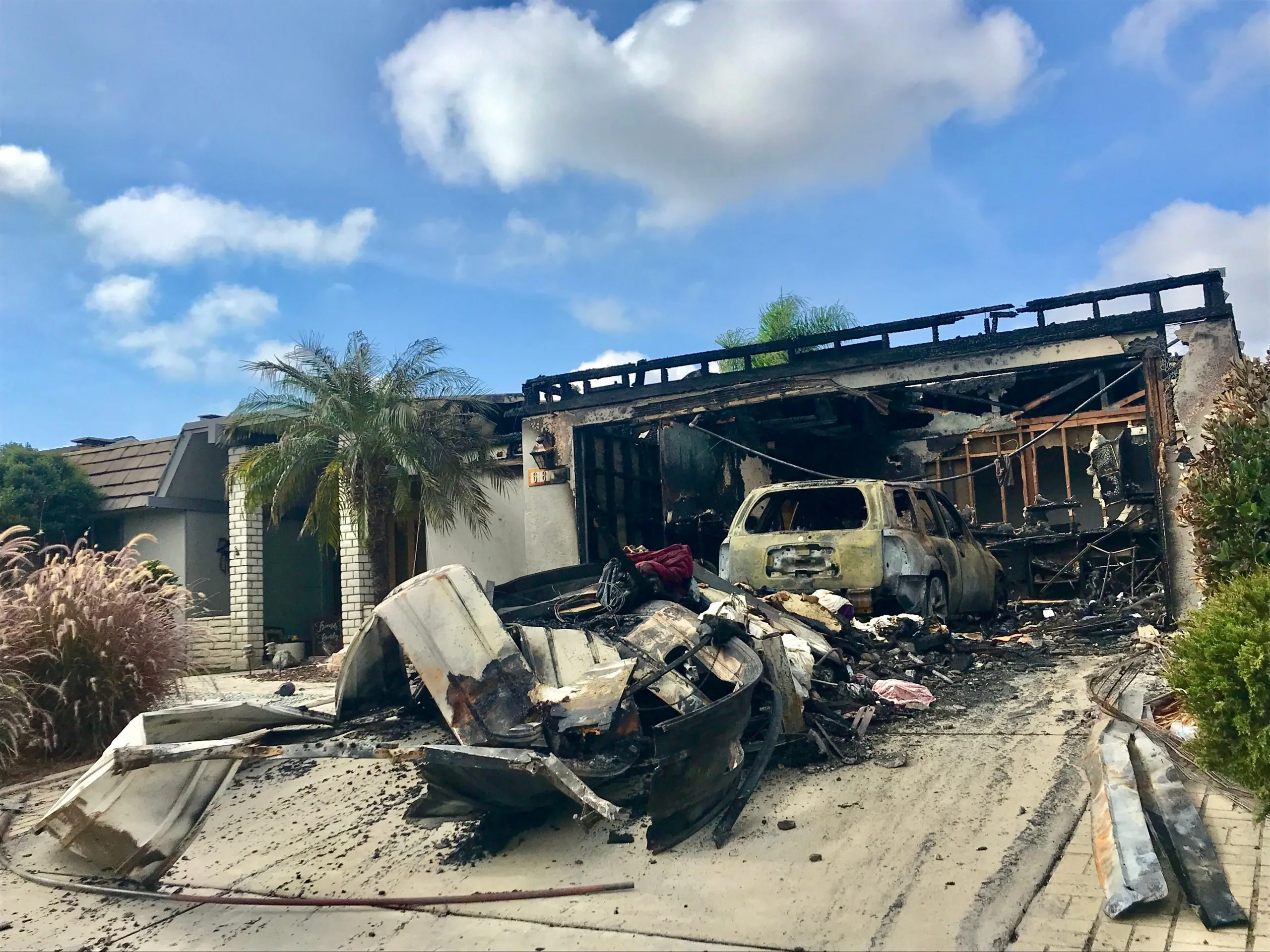
Quick Answer: Soot removal requires surface-specific methods—using the wrong technique can set stains permanently or cause irreversible damage. Dry soot on painted walls requires dry chemical sponges (never water first). Wet/sticky soot needs specialized degreasing solvents. Carpets require HEPA vacuuming followed by professional extraction. HVAC systems need professional decontamination to prevent soot from recirculating. Never use regular household cleaners on soot. Call Save The Day Restoration at (562) 246-9908 for professional soot removal across LA and Orange County.
What Is Soot and Why Is It So Damaging After a Fire?
Soot is one of the most damaging and difficult-to-remove byproducts of fire. Unlike ash, which consists of larger particles that settle, soot is made up of microscopic carbon particles (0.01-10 microns) that penetrate porous materials, bond to surfaces, and cause permanent damage if not properly removed.
At Save The Day Restoration, we've cleaned soot from thousands of Los Angeles and Orange County properties. The single most important thing homeowners need to understand: different surfaces require completely different soot removal methods. Using the wrong technique can set stains permanently or cause irreversible damage.
What Are the Different Types of Soot?
What Is Dry Soot?
Source: Fast-burning, high-temperature fires (paper, wood). Appearance: Powdery, gray or black residue that easily smears. Behavior: Falls off easily but spreads when touched. Removal Difficulty: Moderate (easier than wet soot).
What Is Wet Soot (Petroleum Residue)?
Source: Low-temperature, smoldering fires with synthetic materials, plastics, rubber. Appearance: Sticky, thick, tar-like black residue. Behavior: Smears when touched, extremely difficult to remove. Removal Difficulty: Very high (requires specialized solvents).
What Is Protein Residue?
Source: Kitchen fires, especially cooking oils and meats. Appearance: Nearly invisible yellowish or brown discoloration. Behavior: Leaves strong odor, difficult to see but easy to smell. Removal Difficulty: High (requires specific deodorization).
What Is Fuel Oil Soot?
Source: Furnace puff-backs, heating system malfunctions. Appearance: Oily black residue throughout home. Behavior: Penetrates everything, leaves greasy film. Removal Difficulty: Very high (extensive cleaning required).
How Do You Remove Soot From Different Surfaces?
How Do You Clean Soot From Painted Walls and Ceilings?
Dry Soot Method: HEPA vacuum with soft brush attachment (no contact with wall), dry chemical sponge to lift residue without water, work top to bottom in overlapping strokes, use new sponge sections as they become saturated, follow with damp (not wet) microfiber cloth if needed.
Wet Soot Method: Apply specialized degreasing solvent, let dwell for manufacturer-recommended time, agitate gently with soft bristle brush, wipe with solvent-dampened cloth, rinse with clean water, and repeat as needed.
Professional Sealing: After cleaning, apply oil-based stain-blocking primer to prevent bleed-through before repainting.
How Do You Remove Soot From Drywall?
Light Soot: Same process as painted walls. Heavy Soot: May require removal and replacement if deeply penetrated. Professional assessment determines salvageability. Unpainted drywall absorbs soot deeply and is often not salvageable.
How Do You Clean Soot From Wood Surfaces?
Finished Wood: Dry chemical sponge for initial soot removal, wood-safe degreaser applied with soft cloth, wipe in direction of wood grain, avoid excessive moisture (causes swelling), polish with wood conditioner after cleaning.
Unfinished Wood: Extremely porous—absorbs soot deeply. Often requires sanding to bare wood. May need complete refinishing. Professional assessment recommended.
How Do You Remove Soot From Hardwood Floors?
Light Soot: HEPA vacuum thoroughly, dry chemical sponge, hardwood floor cleaner (pH neutral), damp (not wet) mop, dry immediately with soft cloths.
Heavy Soot or Staining: May require professional sanding and refinishing. Polyurethane finish protects from deep penetration. Wax finishes offer less protection and need deeper cleaning.
How Do You Clean Soot From Carpets and Rugs?
Dry Soot: HEPA vacuum multiple times (don't rub fibers), dry chemical sponge on surface soot, professional hot water extraction cleaning, deodorization treatment.
Wet Soot: Professional-only cleaning with specialized solvents. May require disposal if heavily saturated. Insurance claim for replacement is common.
Protein Residue: Enzyme-based cleaners, multiple cleaning passes, extended deodorization with hydroxyl generators.
How Do You Remove Soot From Upholstery and Fabric Furniture?
Assessment First: Check manufacturer cleaning codes (W, S, WS, X). Test cleaning method on hidden area. Heavily contaminated pieces are often not salvageable.
Professional Cleaning: Dry cleaning solvents for S-code fabrics, water-based extraction for W-code fabrics, ultrasonic cleaning for delicate items, ozone treatment for odor removal.
How Do You Clean Soot From Glass, Metal, and Stone Surfaces?
Glass and Mirrors: HEPA vacuum loose soot before wiping, spray glass cleaner on cloth (not surface), wipe in one direction, dry immediately with microfiber cloth.
Stainless Steel: Dry chemical sponge, stainless steel cleaner, wipe with grain direction.
Granite and Sealed Stone: Dry chemical sponge, pH-neutral stone cleaner, soft cloth application, avoid acidic cleaners.
Unsealed Stone: Professional cleaning required. May need re-sealing after.
Why Does HVAC Soot Cleaning Require a Professional?
HVAC duct soot cleaning requires specialized equipment including negative air machines to prevent spread, complete system disassembly for thorough cleaning, HEPA vacuums designed for ductwork, filter replacement with MERV 13+ filters, and coil and blower cleaning. Improper HVAC cleaning spreads soot throughout the home, making contamination worse.
What Should You Never Do When Removing Soot?
- Never use regular household cleaners—they set stains permanently
- Never wipe walls with water first—creates permanent streaking
- Never use a regular vacuum without HEPA filter—spreads soot into air
- Never rub carpets vigorously—drives soot deeper into fibers
- Never use bleach—doesn't remove soot and damages surfaces
- Never mix cleaning products—dangerous chemical reactions possible
When Should You Call a Professional for Soot Removal?
DIY soot removal is appropriate only for very minor smoke exposure in a single small area, dry soot only (no wet or sticky residue), non-porous surfaces like glass and metal, and situations with no lingering odor.
Professional restoration is required for: wet or sticky soot, soot on multiple surfaces or throughout home, protein residue from cooking fires, HVAC system contamination, persistent odors, porous materials (drywall, carpet, upholstery), and any uncertainty about proper methods.
How Much Does Professional Soot Removal Cost in LA and Orange County?
- Single room cleaning: $500 - $2,000
- Whole home cleaning: $3,000 - $15,000+
- HVAC decontamination: $1,000 - $3,000
- Content cleaning: Varies by item volume
Most homeowner's insurance covers professional soot removal under fire damage claims.
FAQ: Soot Removal After Fire Damage
Q: Can I clean soot off walls myself?
A: Only for light, dry soot on painted surfaces using dry chemical sponges. Never use water or regular cleaners first—this sets soot stains permanently. For wet soot, heavy contamination, or multiple rooms, professional cleaning is essential to avoid permanent damage.
Q: Why can't I just use soap and water to clean soot?
A: Water and standard cleaners chemically bond soot to surfaces, creating permanent stains that cannot be removed even by professionals. Soot must first be dry-cleaned with chemical sponges or HEPA-vacuumed before any wet cleaning methods are used.
Q: How do I know what type of soot I have?
A: Dry soot is powdery and gray/black (from wood or paper fires). Wet soot is sticky and tar-like (from plastic or synthetic fires). Protein residue is nearly invisible but has a strong odor (from kitchen fires). A professional can identify the type and recommend the correct removal method.
Q: Does soot cause health problems?
A: Yes. Soot particles are small enough to penetrate deep into lungs and contain toxic compounds including carcinogens. Prolonged exposure can cause respiratory issues, skin irritation, and long-term health problems. Professional removal is recommended for health safety.
Q: Will my insurance cover professional soot cleaning?
A: Yes, most homeowner policies cover professional soot removal as part of a fire damage claim, including surface cleaning, HVAC decontamination, content cleaning, and any necessary material replacement.
Q: How long does professional soot removal take?
A: Single-room soot cleaning takes 1-3 days. Whole-home cleaning takes 1-3 weeks depending on severity, soot type, and number of affected surfaces. HVAC decontamination adds 1-2 days to the overall timeline.
Why Choose Save The Day Restoration for Soot Removal?
Save The Day Restoration uses surface-specific soot removal methods proven effective across thousands of Los Angeles and Orange County fire restoration projects:
- IICRC-certified fire restoration specialists
- Surface-specific cleaning protocols
- Professional-grade dry chemical sponges and solvents
- Complete HVAC decontamination capabilities
- Content cleaning and pack-out services
- Direct insurance billing
- Licensed contractor (#1049188) for reconstruction if needed
- 24/7 emergency response across LA and Orange County
Don't risk permanent damage with improper soot removal. Call Save The Day Restoration at (562) 246-9908 for professional fire damage cleaning throughout Los Angeles and Orange County.
.png)

About Save The Day Restoration
Save The Day Restoration & Reconstruction is a locally owned disaster restoration company in Signal Hill, CA serving all of Los Angeles and Orange County. We handle water damage, fire damage, mold remediation, and licensed reconstruction. IICRC certified. Contractor #1049188. Call (562) 246-9908 anytime.

Keep reading
More expert guides from our restoration team


Damage needs immediate action
Call (562) 246-9908 for 24/7 emergency restoration. Licensed #1049188. Serving all of LA and Orange County.