

Quick Answer: A slab leak is a water leak in the plumbing pipes running beneath or within your home's concrete slab foundation. Warning signs include unexplained increases in your water bill, the sound of running water when no fixtures are on, warm or damp spots on floors, cracked or heaving flooring, mold or mildew odors near the floor, and foundation cracks. Slab leaks are extremely common in Southern California homes due to hard water corrosion, soil movement, and seismic activity. Professional detection uses acoustic listening equipment, electromagnetic pipe locators, and thermal imaging. Repair options range from $500-$5,000+ depending on method. Call Save The Day Restoration at (562) 246-9908 for slab leak water damage restoration across LA and Orange County.
Why Are Slab Leaks So Common in LA and Orange County?
Southern California has some of the highest rates of slab leaks in the country, and it's not a coincidence. The combination of geological conditions, water chemistry, building practices, and climate creates a perfect storm for under-slab plumbing failures.
Most homes in LA and Orange County are built on concrete slab foundations—a cost-effective construction method well-suited to our mild climate and expansive clay soils. Water supply and drain lines are routed through or beneath the concrete slab, encased in soil or sand. These pipes are invisible, inaccessible, and constantly subjected to conditions that accelerate failure.
At Save The Day Restoration, slab leak water damage is one of our most common restoration projects across LA and Orange County. The challenge with slab leaks isn't just the leak itself—it's the hidden damage that accumulates for weeks or months before detection, often resulting in extensive mold growth, flooring destruction, and structural issues that far exceed the cost of the plumbing repair.
What Causes Slab Leaks in Southern California Homes?
How Does Hard Water Cause Slab Leaks?
LA and Orange County's hard water (200-400+ PPM mineral content) is the primary driver of slab leak failures. Mineral-laden water flowing through copper pipes causes internal corrosion through a process called dezincification (in brass fittings) and pitting corrosion (in copper pipes). Hot water lines corrode 2-3 times faster than cold water lines because heat accelerates the chemical reaction. This is why hot water slab leaks are significantly more common and often detected by warm spots on the floor.
How Does Soil Movement Cause Slab Leaks?
Southern California's expansive clay soils (particularly common in areas of Los Angeles, Long Beach, Anaheim, Fullerton, and throughout the inland valleys) expand when wet and shrink when dry. This seasonal movement creates shifting forces on pipes beneath the slab, rubbing pipes against concrete and soil (abrasion), flexing pipes at joints and fittings, and creating pressure points where pipes pass through or around the slab. Seismic activity adds another dimension—even minor earthquakes create ground movement that stresses under-slab plumbing.
How Does Pipe Age and Material Contribute?
Copper supply lines installed in homes built from the 1960s through 1990s are now 30-60+ years old—well into the failure-prone period for copper exposed to hard water. Galvanized steel drain lines in older homes are even more vulnerable. Original cast iron drain lines, common in homes built before 1970, deteriorate from the inside out and can collapse entirely after 50+ years.
What Are the Warning Signs of a Slab Leak?
Slab leaks are hidden by nature, but they produce detectable signs—if you know what to look for.
Unexplained water bill increase: This is often the first and most reliable indicator. Even a small slab leak running continuously can waste 1,000-10,000+ gallons per month. Compare your current bill to the same month in previous years. An increase of 20%+ without a change in usage warrants investigation.
Sound of running water: When all fixtures and appliances are off, go to the quietest part of your home and listen. The sound of running water—even faint hissing or rushing—suggests a pressurized leak somewhere in the system.
Warm spots on the floor: Hot water slab leaks create localized warm areas on flooring that you can feel with bare feet. Walk your home barefoot—especially on tile and hard flooring—and note any areas that feel noticeably warmer than surrounding areas.
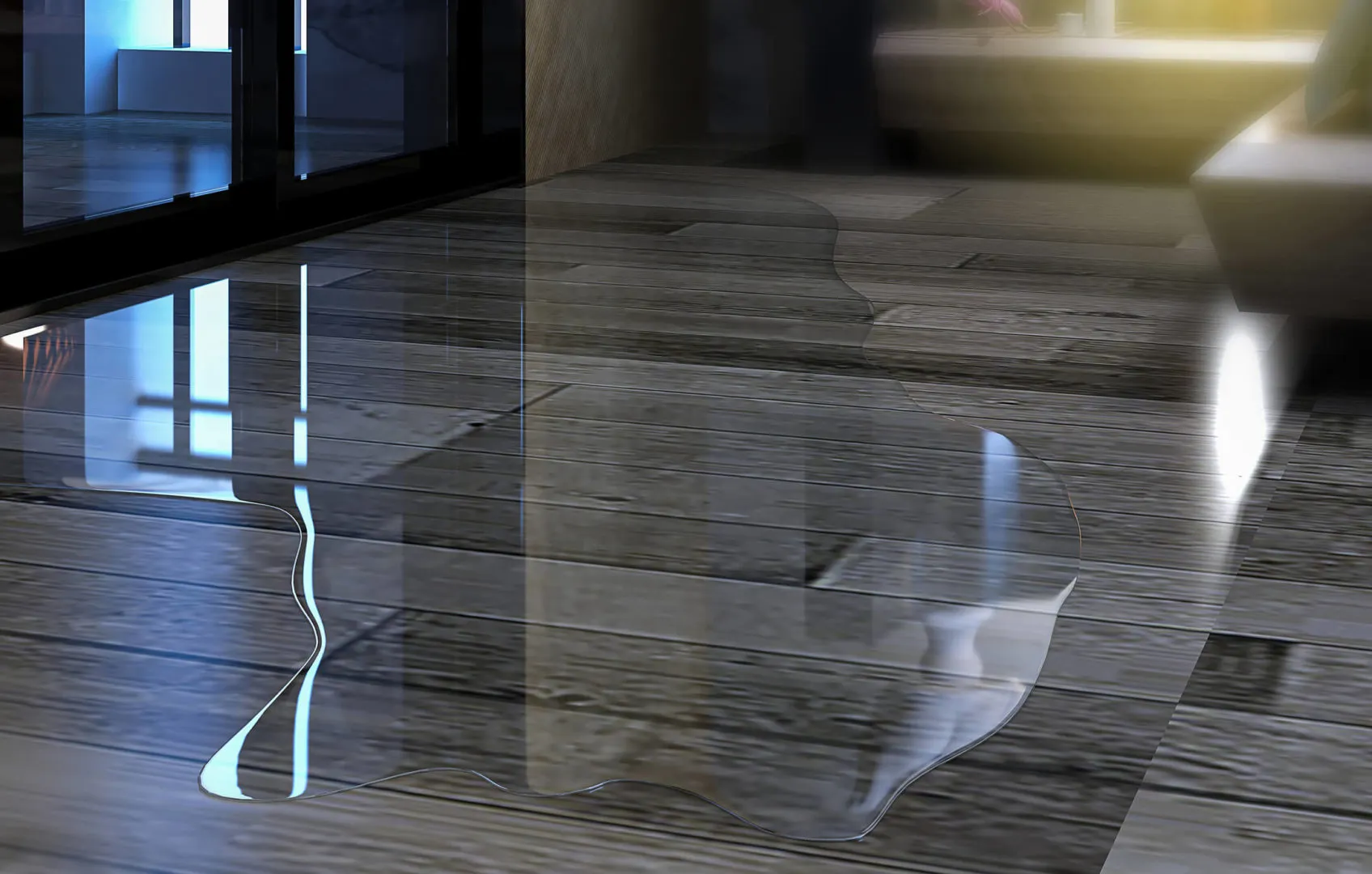
Damp or wet flooring: Carpet that feels damp, hardwood that's warping or cupping, laminate that's bubbling, or tile with efflorescence (white mineral deposits) at grout lines all indicate moisture migrating upward through the slab.
Mold or mildew odor: A persistent musty smell near the floor—especially in areas without obvious moisture—may indicate mold growing on the underside of flooring materials fed by slab leak moisture.
Foundation cracks: While some hairline cracking is normal in concrete, new cracks or the widening of existing cracks can indicate soil erosion from a leaking pipe undermining the foundation.
Low water pressure: A significant drop in water pressure throughout the home suggests a substantial leak somewhere in the supply system—possibly under the slab.
Water meter test: Turn off all water fixtures and appliances. Check your water meter. If the meter continues to show flow (the low-flow indicator is spinning), you have a leak somewhere in the system between the meter and your home.
How Do Professionals Detect Slab Leaks?
Professional slab leak detection uses non-invasive technology to locate the exact position of a leak without tearing up your floor.
Electronic acoustic detection: Sensitive listening equipment amplifies the sound of water escaping from pressurized pipes beneath the slab. Technicians move sensors across the floor, identifying the point where leak sound is loudest. This is the primary detection method and can locate leaks within 1-2 feet of their actual position.
Electromagnetic pipe locating: Transmitters send electromagnetic signals through metallic pipes, allowing technicians to map the exact route of supply and drain lines beneath the slab. Once the pipe layout is mapped, acoustic detection pinpoints the leak location on that route.
Thermal imaging: Infrared cameras detect temperature differences on the floor surface caused by hot water leaks. Warm water migrating through the slab creates a thermal signature visible on camera—often revealing the leak path and approximate location.
Pressure testing: Isolating supply lines and monitoring pressure drop over time confirms whether a leak exists and which line (hot or cold) is affected. Static pressure tests eliminate false positives from other potential causes of the warning signs.
What Are the Repair Options for Slab Leaks?
Spot repair ($500-$2,500): Breaking through the slab at the leak location, repairing or replacing the damaged pipe section, and patching the concrete. This is the most affordable option for a single leak point, but doesn't address the overall condition of aging pipes.
Reroute/Repipe ($2,000-$5,000+): Abandoning the under-slab pipe and routing new supply lines through the attic, walls, or ceiling. This avoids future slab leak risk for that line and is recommended when pipe condition suggests additional failures are likely.
Epoxy pipe lining ($3,000-$7,000): Coating the interior of existing pipes with epoxy to seal leaks and prevent future corrosion. Non-invasive but not suitable for all situations—pipe condition and diameter must be assessed.
Full repipe ($5,000-$15,000+): Replacing all supply lines with modern PEX piping routed through accessible areas (attic, walls). Eliminates all future slab leak risk for supply lines and is the most comprehensive long-term solution.
What Water Damage Do Slab Leaks Cause?
The water damage from slab leaks is often extensive because the leak typically runs for weeks or months before detection. Damage commonly includes saturated carpet, padding, and subfloor requiring removal, mold growth on the underside of flooring materials and along baseboards, warped or buckled hardwood flooring, delaminated laminate flooring, efflorescence and damage to tile and grout, baseboard and lower drywall damage from wicking moisture, and musty odors throughout the affected area.
The mold risk from slab leaks is particularly high because the moisture source is continuous and hidden. Mold can colonize the underside of carpet padding, the bottom of drywall, and other concealed surfaces for months before becoming visible or producing noticeable odors.
FAQ: Slab Leaks in Southern California
Q: Does insurance cover slab leak damage?
A: Insurance typically covers the resulting water damage (flooring, drywall, mold remediation) but not the pipe repair itself. The key is establishing that the leak was sudden or not reasonably detectable—not a long-term maintenance issue. Professional documentation from your restoration company and plumber supports this characterization.
Q: How much does slab leak detection cost?
A: Professional electronic slab leak detection typically costs $150-$400 in LA and Orange County. This includes acoustic listening, pipe locating, and a report identifying the leak location. Many plumbing companies offer free detection if you hire them for the repair.
Q: Can a slab leak damage my foundation?
A: Yes. Prolonged slab leaks erode soil beneath the foundation, potentially causing settlement, cracking, and structural instability. Hot water leaks are particularly damaging because heated water accelerates soil erosion. If you suspect a slab leak, address it promptly to prevent foundation damage.
Q: How common are slab leaks in LA and Orange County?
A: Very common. Some plumbing companies report that slab leaks account for 30-40% of their service calls in Southern California. Homes with copper plumbing over 20 years old in hard water areas are at the highest risk.
Q: Should I repipe my entire home if I have one slab leak?
A: One slab leak suggests system-wide pipe deterioration, especially if your home has copper pipes over 25 years old in LA or Orange County's hard water conditions. A second slab leak makes full repiping strongly advisable. Discuss pipe condition with your plumber—a camera inspection of remaining pipes can assess whether additional failures are imminent.
Q: Does Save The Day Restoration handle slab leak water damage?
A: Yes. We handle the complete water damage restoration from slab leaks including water extraction, flooring removal, structural drying, mold remediation (if needed), and reconstruction. We coordinate with your plumber for the pipe repair and handle all insurance documentation and direct billing.
Don't Ignore the Warning Signs
Slab leaks don't fix themselves—they get worse every day, causing progressively more damage and higher repair costs. If you notice any warning signs, act now.
Call Save The Day Restoration at (562) 246-9908 for slab leak water damage restoration throughout LA and Orange County. We provide 24/7 emergency response, professional water extraction and structural drying, mold prevention and remediation, and complete insurance documentation with direct billing. IICRC-certified technicians, licensed general contractor #1049188.
.png)

About Save The Day Restoration
Save The Day Restoration & Reconstruction is a locally owned disaster restoration company in Signal Hill, CA serving all of Los Angeles and Orange County. We handle water damage, fire damage, mold remediation, and licensed reconstruction. IICRC certified. Contractor #1049188. Call (562) 246-9908 anytime.

Keep reading
More expert guides from our restoration team

Damage needs immediate action
Call (562) 246-9908 for 24/7 emergency restoration. Licensed #1049188. Serving all of LA and Orange County.