Cleaning
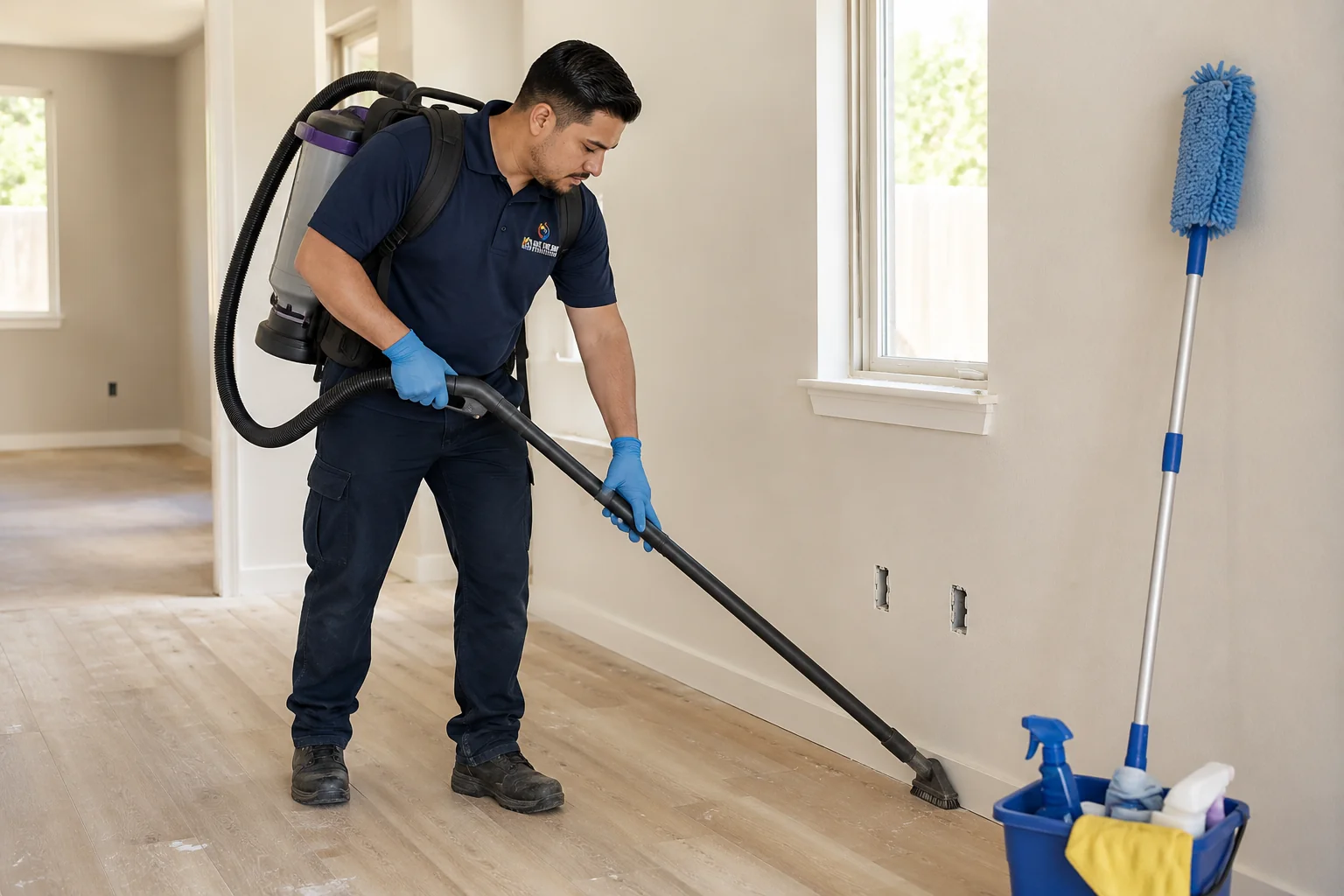
Professional cleaning and decontamination is a specialized service that removes hazardous residues, biological contaminants, smoke and soot deposits, construction dust, and microbial contamination from residential and commercial properties using commercial-grade equipment, EPA-registered disinfectants, and trained technicians following IICRC and OSHA protocols to restore safe, healthy indoor environments after property damage events, biohazard incidents, or construction projects.
Professional Cleaning & Decontamination Services in Southern California
Quick Answer: Professional cleaning after property damage goes far beyond standard janitorial services. Restoration cleaning removes hazardous contaminants—smoke and soot residue, biological contaminants from sewage or flooding, mold spores, construction dust, chemical residues, and microbial contamination—using commercial-grade equipment, EPA-registered disinfectants, and IICRC-trained technicians. This specialized cleaning is a critical phase of every restoration project, ensuring your home is safe and healthy before you move back in. Save The Day Restoration provides professional cleaning and decontamination throughout Los Angeles and Orange County. Call (562) 246-9908.
Why Is Professional Cleaning Essential After Property Damage?
Every type of property damage leaves behind contamination that standard cleaning methods cannot address. Fire damage deposits corrosive soot and carcinogenic smoke residue on every surface. Water damage introduces bacteria, sediment, and organic contamination that saturates porous materials. Sewage backups spread dangerous pathogens including E. coli, salmonella, and hepatitis across floors, walls, and any surface contacted. Mold remediation leaves behind antimicrobial residues and disturbed spore particles. Even construction and renovation work generates fine silica dust, drywall particulate, and chemical off-gassing that require professional cleanup.
Consumer cleaning products and household equipment are designed for routine dirt and grime—not hazardous contaminants. Bleach does not kill all pathogens found in sewage. Standard vacuums redistribute fine particles rather than capturing them. Household mops spread contamination rather than removing it. Professional restoration cleaning uses HEPA-filtered vacuums that capture 99.97% of particles down to 0.3 microns, EPA-registered hospital-grade disinfectants with verified kill claims, commercial extraction equipment that removes contaminants from deep within materials, and specialized techniques calibrated to the specific type of contamination present.
What Types of Professional Cleaning Does Save The Day Provide?
How Is Smoke and Soot Cleaning Performed?
Smoke and soot cleaning is one of the most technically demanding restoration cleaning specialties. Soot is chemically active and corrosive—it permanently damages surfaces if not removed properly and promptly. Different fire sources produce different soot types, each requiring specific cleaning methods.
Dry soot from wood and paper fires is powdery and loose. It must be removed with dry chemical sponges and HEPA vacuuming before any wet cleaning. Applying water or liquid cleaners to dry soot smears it permanently into the surface grain, making it nearly impossible to remove.
Wet/oily soot from synthetic material fires (plastics, carpet, foam, rubber) is sticky, black, and extremely difficult to remove. It requires solvent-based cleaners, degreasing agents, and aggressive agitation. Multiple cleaning passes are standard.
Protein soot from kitchen fires is nearly invisible but produces intense, penetrating odors. It requires enzyme-based cleaners that break down organic compounds at the molecular level.
Professional smoke and soot cleaning addresses every affected surface in your home: walls, ceilings, cabinetry, countertops, fixtures, glass, metal, hard flooring, exposed framing and structural members, and all mechanical systems. Surfaces that cannot be adequately cleaned (porous materials with deep soot penetration) are removed for replacement during reconstruction.
How Is Water Damage Cleanup Performed?
Water damage cleaning follows extraction and depends on the water category. Category 1 (clean water) from supply lines requires surface cleaning and antimicrobial treatment of all contacted surfaces. Category 2 (gray water) from appliance discharge, washing machines, or aquarium breaks requires disinfection with EPA-registered products and removal of porous materials contacted. Category 3 (black water) from sewage, flooding, or toilet overflow requires full biohazard cleaning protocols: all contacted porous materials are removed, hard surfaces are cleaned and disinfected multiple times with hospital-grade products, and antimicrobial treatments are applied to all structural surfaces.
After material removal and structural drying, all exposed surfaces receive antimicrobial treatment before reconstruction. This prevents bacterial regrowth and mold colonization in the reconstruction phase.
What Does Biohazard Cleaning Include?
Biohazard cleaning addresses contamination from sewage backups, toilet overflows, animal waste, bodily fluids, and other biological hazards. Technicians wear full personal protective equipment (PPE) including respirators with P100 filters, disposable coveralls, waterproof boots, nitrile gloves, and face shields. The contaminated area is contained under negative air pressure with HEPA filtration. All contaminated porous materials are removed and disposed of as biohazardous waste. Hard surfaces are cleaned, disinfected, and treated with EPA-registered antimicrobial products with verified kill claims against the specific pathogens present. ATP (adenosine triphosphate) testing may be used to verify surface cleanliness to hospital-grade standards.
How Is Construction and Renovation Cleanup Done?
Post-construction cleaning removes the fine dust, debris, and residues left behind by renovation and reconstruction work. Drywall dust is extremely fine (5-25 microns) and settles on every surface, penetrating HVAC systems, cabinets, closets, and electronics. Construction adhesives, paint overspray, grout haze, and caulk residue require specialized cleaning methods for different surface types.
Professional post-construction cleanup includes HEPA vacuuming of all surfaces (including inside cabinets, closets, and ductwork), wet wiping of all hard surfaces, window and glass cleaning, fixture polishing, floor cleaning specific to material type, and detail cleaning of all trim, hardware, and built-ins. This final cleaning transforms a construction site back into a livable home.
What Does Deep Cleaning and Sanitization Include?
Deep cleaning provides comprehensive sanitization for properties requiring thorough decontamination. This includes hoarding cleanup (removing accumulated debris, sanitizing surfaces, addressing biological contamination), post-tenant cleaning (restoring rental properties to move-in condition after damage or neglect), estate cleaning (preparing properties for sale after extended vacancy), and odor source removal (pet contamination, cooking residue, tobacco smoke, chemical spills). Deep cleaning uses commercial extraction equipment, industrial-strength cleaning agents, and systematic room-by-room protocols to achieve a verified clean standard.
What Equipment Is Used for Professional Cleaning?
Professional restoration cleaning requires commercial-grade equipment that consumer products cannot match. HEPA air scrubbers filter and clean indoor air continuously during cleaning, capturing 99.97% of airborne particles including dust, spores, smoke particles, and biological contaminants. Truck-mounted extraction systems remove contaminated water and cleaning solutions from carpets, hard surfaces, and structural materials at far greater power than portable units. Commercial HEPA vacuums capture fine particles that standard vacuums exhaust back into the air. Hydroxyl generators produce hydroxyl radicals that destroy odor-causing molecules at the molecular level—safe for occupied spaces, effective on embedded odors. Thermal foggers disperse deodorizing agents as heated fog that penetrates the same crevices and materials that smoke and odors reached. ULV (Ultra-Low Volume) foggers distribute disinfectants and antimicrobial agents as fine mist for comprehensive surface coverage.
How Much Does Professional Cleaning Cost?
Professional cleaning costs vary based on contamination type, area size, and cleaning intensity required. Post-construction cleanup: $0.15-$0.50 per square foot. Smoke and soot cleaning (without structural damage): $3,000-$15,000 depending on affected area. Water damage cleaning (Category 1-2): included in water damage restoration cost. Biohazard/sewage cleanup: $3,000-$30,000+ depending on extent. Deep cleaning and sanitization: $1,000-$5,000 depending on property size and condition. Move-in/move-out cleaning: $500-$2,000 depending on property size.
When professional cleaning is part of an insurance claim (fire damage, water damage, sewage backup), it is covered as part of the restoration scope. Save The Day Restoration includes all cleaning costs in the insurance estimate and handles direct billing.
Does Insurance Cover Professional Cleaning?
Professional cleaning is covered by insurance when it is part of a covered property damage claim. Fire damage claims include all smoke and soot cleaning. Water damage claims include all cleaning and disinfection. Sewage backup claims (if the endorsement is on your policy) include full biohazard cleaning. The cleaning phase is documented as part of the overall restoration scope and billed directly to insurance.
Cleaning that is not part of an insurance claim (deep cleaning, post-renovation cleanup, routine sanitization) is paid by the property owner. Save The Day Restoration provides detailed estimates for all non-insurance cleaning services.
FAQ: Professional Cleaning Services
Q: What does professional cleaning after property damage include?
A: Professional cleaning after property damage includes HEPA vacuuming all surfaces, cleaning and disinfecting all hard surfaces with EPA-registered products, antimicrobial treatment of structural materials, air scrubbing with HEPA filtration, odor elimination, and detail cleaning of all fixtures, hardware, and finishes. The specific protocols depend on contamination type—smoke and soot require different methods than water damage or biohazard contamination.
Q: Can regular cleaning services handle property damage cleanup?
A: No. Standard cleaning services are not equipped or trained for hazardous contamination. Smoke and soot require specific chemical cleaning methods that differ by soot type. Sewage and biohazard cleaning requires PPE, containment, and EPA-registered disinfectants with verified pathogen kill claims. Construction dust requires HEPA filtration. Using standard cleaning methods on restoration contamination can spread hazards, damage surfaces permanently, and leave dangerous residues behind.
Q: How long does professional cleaning take after property damage?
A: Smoke and soot cleaning: 2-7 days depending on affected area. Water damage cleaning: 1-3 days (integrated with the drying process). Biohazard cleaning: 1-3 days. Post-construction cleanup: 1-3 days depending on property size. Deep cleaning and sanitization: 1-2 days. Timeline depends on contamination type, affected area, and the number of surfaces requiring treatment.
Q: Is professional cleaning safe for my family and pets?
A: Yes. All cleaning products used are EPA-registered and safe for residential use when applied by trained technicians. Occupants and pets should not be present during active cleaning (especially when chemical agents are being applied), but the home is safe for reoccupancy once cleaning is complete and surfaces have dried. HEPA air scrubbers run during and after cleaning to ensure clean indoor air quality.
Q: Does Save The Day handle cleaning as part of full restoration?
A: Yes. Professional cleaning is integrated into every restoration project we manage—it is not a separate service you need to coordinate. Whether your project involves fire, water, mold, sewage, or storm damage, all cleaning and decontamination is included in our restoration scope, documented for insurance, and performed by our trained technicians before reconstruction begins. One company, one continuous process. Call (562) 246-9908.
Professional post-damage and post-renovation cleaning is one of our most requested services throughout the region. Homeowners in Irvine and Costa Mesa frequently schedule deep cleaning after remodeling projects to eliminate construction dust and residue before move-in. In Los Angeles and Burbank, our commercial cleaning crews handle post-fire soot removal and smoke decontamination for both residential and commercial properties. Pasadena and Long Beach property owners often combine our cleaning services with water damage restoration for a seamless recovery, while clients in Torrance and Anaheim count on us for thorough decontamination cleaning after mold remediation and sewage incidents.
Clean, Safe, and Ready to Live In
Professional cleaning after property damage isn’t optional—it’s the difference between a home that looks clean and one that actually is safe.
Call Save The Day Restoration at (562) 246-9908 for professional cleaning and decontamination throughout Los Angeles and Orange County. IICRC-certified technicians, EPA-registered products, licensed general contractor #1049188, direct insurance billing with all major carriers.
Our Cleaning & Decontamination Process Includes:
01
Contamination Assessment & Cleaning Protocol Development
We identify contamination types present, whether smoke, mold, sewage, biological, or chemical, and develop a cleaning protocol specific to each contaminant.
02
HEPA Air Scrubbing & Filtration Setup
HEPA air scrubbers begin filtering airborne particles immediately. Clean air is maintained throughout the entire cleaning process to protect workers and prevent recontamination.
03
Smoke, Soot & Residue Removal from All Surfaces
Soot, smoke film, and fire residue are removed from walls, ceilings, and all hard surfaces. We use chemical and mechanical methods matched to each surface material.
04
EPA-Registered Disinfection & Antimicrobial Treatment
EPA-registered disinfectants and antimicrobial agents eliminate bacteria, viruses, and mold on all treated surfaces. Multiple applications ensure thorough pathogen elimination.
05
Commercial Extraction & Deep Surface Cleaning
Commercial extraction equipment deep-cleans carpets, upholstery, and porous surfaces. Hot water extraction and specialty solutions remove embedded contamination from soft materials.
06
Odor Elimination with Hydroxyl & Thermal Fogging
Hydroxyl generators and thermal fogging eliminate odors at the molecular level. We address the odor source, not just mask symptoms, for permanent results.
07
Detail Cleaning of Fixtures, Hardware & Finishes
Every fixture, switch plate, door handle, and detail surface is individually cleaned. Thorough detail work is what separates professional cleaning from surface-level results.
08
Final Inspection & Safe Reoccupancy Verification
Air quality testing and surface sampling verify contamination has been eliminated. We document clearance results and confirm your property is safe for occupancy.
What we handle
Specialized services for your specific damage

Cleaning
Professional deep cleaning, sanitization, and decontamination for homes and businesses after property damage across LA & Orange County

Biohazard Cleanup
Professional biohazard cleanup and decontamination for blood, bodily fluids, and hazardous biological materials

Asbestos Removal & Abatement
Licensed asbestos testing, removal, and abatement services for safe elimination of hazardous materials
We work with all major insurance carriers





CITIES WHERE THIS SERVICE IS AVAILABLE
Same certified technicians, same fast response — wherever you are in LA or Orange County. Select your city to see local details and schedule service.



WHERE WE OFFER THIS SERVICE
24/7 emergency response across Los Angeles and Orange County. Click your city for local service details and response times.

Common Questions
Common questions about this service
Professional cleaning after property damage includes HEPA vacuuming all surfaces, cleaning and disinfecting all hard surfaces with EPA-registered products, antimicrobial treatment of structural materials, air scrubbing with HEPA filtration, odor elimination, and detail cleaning of all fixtures, hardware, and finishes. The specific protocols depend on contamination type—smoke and soot require different methods than water damage or biohazard contamination.
No. Standard cleaning services are not equipped or trained for hazardous contamination. Smoke and soot require specific chemical cleaning methods that differ by soot type. Sewage and biohazard cleaning requires PPE, containment, and EPA-registered disinfectants with verified pathogen kill claims. Construction dust requires HEPA filtration. Using standard cleaning methods on restoration contamination can spread hazards, damage surfaces permanently, and leave dangerous residues behind.
Smoke and soot cleaning: 2-7 days depending on affected area. Water damage cleaning: 1-3 days (integrated with the drying process). Biohazard cleaning: 1-3 days. Post-construction cleanup: 1-3 days depending on property size. Deep cleaning and sanitization: 1-2 days. Timeline depends on contamination type, affected area, and the number of surfaces requiring treatment.
Yes. All cleaning products used are EPA-registered and safe for residential use when applied by trained technicians. Occupants and pets should not be present during active cleaning (especially when chemical agents are being applied), but the home is safe for reoccupancy once cleaning is complete and surfaces have dried. HEPA air scrubbers run during and after cleaning to ensure clean indoor air quality.
Yes. Professional cleaning is integrated into every restoration project we manage—it is not a separate service you need to coordinate. Whether your project involves fire, water, mold, sewage, or storm damage, all cleaning and decontamination is included in our restoration scope, documented for insurance, and performed by our trained technicians before reconstruction begins. One company, one continuous process. Call (562) 246-9908.
Need more answers?
Reach out anytime
Damage is happening right now
Call (562) 246-9908 now. Licensed #1049188. IICRC certified. We're dispatching immediately.
