

Quick Answer: The decision to rebuild or relocate after major property damage depends on the extent of structural damage, repair costs vs. property value, insurance coverage limits, emotional attachment to the home and neighborhood, recurring risk factors (flood zone, fire zone, mudslide area), timeline for reconstruction, and personal financial circumstances. In most cases, rebuilding is financially advantageous because insurance covers restoration to pre-loss condition with code upgrades, and LA/Orange County real estate values make existing property locations highly valuable. However, when damage exceeds 50-75% of the structure's value, the property faces recurring high-risk hazards, or personal circumstances have changed, relocating may be the better choice. Call Save The Day Restoration at (562) 246-9908 for professional damage assessment across LA and Orange County.
When Does Rebuilding Make Financial Sense?
For most property damage scenarios in LA and Orange County, rebuilding is the financially sound choice. Your land retains its full value regardless of the structure's condition—and in Southern California's real estate market, land value often represents 50-70%+ of total property value. Insurance pays to rebuild the structure to pre-loss condition with current code upgrades, so your out-of-pocket cost is typically limited to your deductible.
Rebuilding makes sense when insurance coverage is sufficient to cover the full reconstruction cost, the structural foundation is intact and reusable, the property isn't subject to recurring catastrophic risk, you value your neighborhood, schools, commute, and community connections, and current real estate prices make buying a comparable home elsewhere equally or more expensive.
The financial math typically favors rebuilding: your insurance pays for reconstruction while you retain ownership of appreciating LA/Orange County real estate. Selling a damaged property means accepting a significant discount, losing your property tax basis (Prop 13 protection), and paying current market prices for a replacement home elsewhere.
When Does Relocation Make More Sense?
Despite the general financial advantage of rebuilding, certain situations favor relocation. The damage exceeds your coverage limits and the gap between insurance proceeds and reconstruction cost is larger than you can fund out of pocket. The property faces recurring high-risk hazards—if your home was destroyed by a wildfire and sits in a designated Very High Fire Hazard Severity Zone, the same risk will exist after rebuilding, potentially with higher insurance premiums or difficulty obtaining coverage. The foundation or land itself is compromised—after mudslides, severe flooding, or seismic events, the land may have geological instability that makes rebuilding inadvisable without extensive (and expensive) geotechnical remediation. Your personal circumstances have changed—job relocation, family size changes, retirement plans, or other life changes may make a different location more practical. The reconstruction timeline is too long—for total loss rebuilds that may take 12-18 months, some families decide the disruption isn't worth it.
How Do You Evaluate the Financial Decision?
What Is Your Insurance Payout?
Request a complete scope and estimate from your insurance company covering dwelling reconstruction, code upgrade costs (ordinance and law coverage), personal property replacement (contents coverage), additional living expenses (ALE) for the reconstruction period, and any applicable extended replacement cost coverage (125-150% of dwelling coverage). Understanding your total insurance payout is the starting point for the rebuild-vs-relocate analysis.
What Would It Cost to Buy a Comparable Home?
Research current market prices for comparable homes in your desired areas. Factor in all costs: purchase price, closing costs (2-5% of purchase price), moving expenses, potential loss of Prop 13 tax basis (your property tax could increase substantially), renovation or customization costs for the new home, and time and stress of house hunting in LA/Orange County's competitive market.
What Is Your Property Worth As-Is?
A damaged property's value is primarily its land value minus demolition costs. In LA and Orange County, this can still be substantial—especially in desirable neighborhoods. However, selling damaged property involves disclosures that may reduce buyer interest, potential environmental issues (fire debris, mold history, contamination), and the time needed to find a buyer willing to rebuild. If the insurance payout plus the as-is property sale price exceeds the cost of purchasing a comparable home elsewhere, relocation may make financial sense.
What Emotional Factors Should You Consider?
The rebuild-or-relocate decision isn't purely financial. Community ties to your neighborhood, schools, religious institutions, and social networks have real value. Proximity to work, family, and services matters for daily quality of life. The emotional investment in a home—memories, customizations, sense of place—is significant. Conversely, the trauma of the damage event can make returning to the same home difficult. Some families find that rebuilding triggers ongoing anxiety, especially if the damage was caused by a hazard (fire, flood) that could recur.
What Special Considerations Apply in LA and Orange County?
Prop 13 implications: California's Proposition 13 limits property tax increases to 2% annually. If you sell and buy a different home, your property taxes reset to the new purchase price—potentially doubling or tripling your annual tax bill. Prop 19 allows some transfer of tax basis for disaster victims, but the rules are specific and may not fully protect your tax basis.
Fire zone restrictions: After wildfires, some areas may face new building restrictions, setback requirements, or vegetation management mandates that affect rebuilding feasibility and cost. Cal Fire's Fire Hazard Severity Zone designations can also impact future insurance availability and cost.
Coastal and hillside regulations: Properties in the California Coastal Zone or in hillside areas may face additional permitting requirements, environmental reviews, and building restrictions that extend reconstruction timelines and costs.
FAQ: Rebuild vs. Relocate
Q: Can I take the insurance money and not rebuild?
A: Policies differ on this point. Many policies pay actual cash value (ACV—replacement cost minus depreciation) if you don't rebuild, and full replacement cost value (RCV) only after reconstruction is completed. The difference can be 20-40% of the total claim. Review your specific policy language or consult with your agent.
Q: What happens to my mortgage if I relocate?
A: Your mortgage remains on the damaged property. If you sell the property to relocate, the mortgage must be paid from the sale proceeds. If the property value has decreased below the mortgage balance, you may face a shortfall. Insurance proceeds are typically paid to both you and the mortgage company jointly.
Q: Can I rebuild a different style or layout?
A: Insurance covers rebuilding to pre-loss condition. If you want changes (larger, different layout, different style), you pay the incremental cost above what insurance covers. Many homeowners combine insurance reconstruction with personal upgrades to create a better home.
Q: How does the Prop 19 tax basis transfer work for disaster victims?
A: Prop 19 allows disaster victims to transfer their Prop 13 property tax basis to a replacement property of equal or lesser value within the same county (or participating county) within two years. However, if the replacement property is more expensive, you pay supplemental taxes on the difference. Consult a tax professional for your specific situation.
Q: What if my home is in a newly designated high-risk zone?
A: After wildfires or floods, FEMA or Cal Fire may reclassify your area's hazard designation. This can affect insurance availability, premium costs, and building requirements. These factors should be weighed in the rebuild-vs-relocate decision.
Q: Can Save The Day help me evaluate the rebuild decision?
A: Yes. We provide comprehensive damage assessments, detailed reconstruction scope and cost estimates, and honest professional guidance on rebuild feasibility. Our assessment helps you make an informed decision based on accurate cost information rather than uncertainty. Call (562) 246-9908 for a free assessment.
Make an Informed Decision
The rebuild-or-relocate decision deserves careful analysis, not a rushed emotional response. Get accurate damage assessment, understand your insurance coverage, and evaluate all financial and personal factors before deciding.
Call Save The Day Restoration at (562) 246-9908 for professional damage assessment and reconstruction planning throughout Los Angeles and Orange County. IICRC-certified technicians, licensed general contractor #1049188, direct insurance billing with all major carriers.
.png)

About Save The Day Restoration
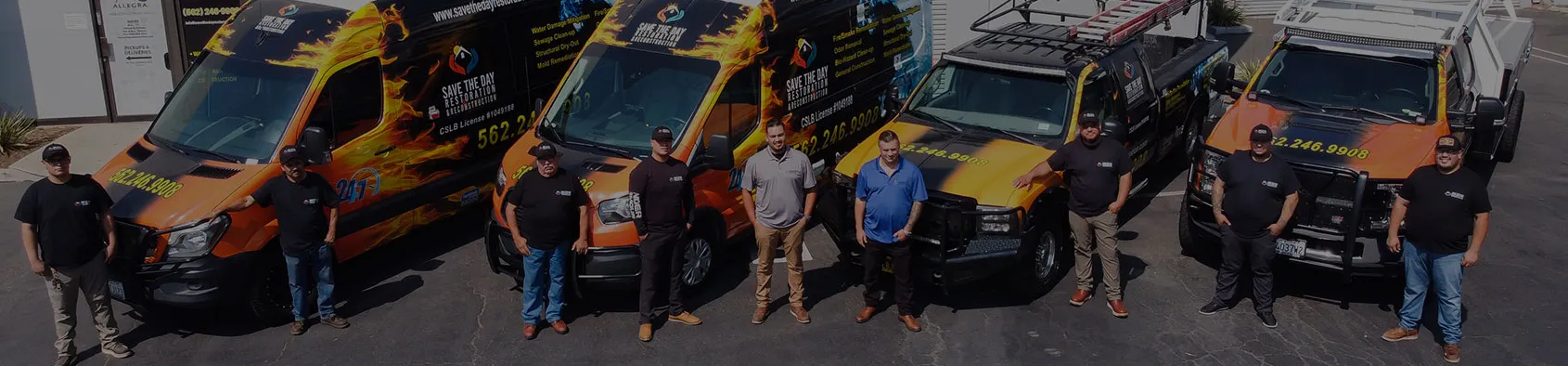
Save The Day Restoration & Reconstruction is a locally owned disaster restoration company in Signal Hill, CA serving all of Los Angeles and Orange County. We handle water damage, fire damage, mold remediation, and licensed reconstruction. IICRC certified. Contractor #1049188. Call (562) 246-9908 anytime.

Keep reading
More expert guides from our restoration team


Damage needs immediate action
Call (562) 246-9908 for 24/7 emergency restoration. Licensed #1049188. Serving all of LA and Orange County.